8 Questions That Reveal What Makes a Top Promo Distributor
Subscribe to the Growth Lab
Table of Contents
- The difference between a promo distributor who scales to the top and one who doesn’t may not be what you think.
- Do the top distributors have better pricing, or is it something else?
- Does response time make a difference for promo products distributors?
- What does “acting like a partner, not a vendor” look like for a promo distributor?
- Do top promo distributors run their business differently, or just sell more?
- Why do top distributors focus on building strong customer relationships?
- Why is professional development important for promo distributors?
- Do sustainability and eco-friendly products really matter to top promo distributors?
- How do the best distributors market their own brand?
The difference between a promo distributor who scales to the top and one who doesn't may not be what you think.
Quick Answer
Top promo distributors have standard operating procedures, strong client relationships, and teams that can operate without handholding. They’ve built a strong foundation that supports growth.
When you look at the distributors who have broken through the $2M, $5M, and $10M brackets and continue scaling up, there are several commonalities that keep popping up. It’s not insider industry secrets. Not some unfair advantage. Just outcomes based on decisions that have added up over time: how fast their team operates, how they view and treat customer relationships, what they invest in, and how they handle problems when they arise.
During a recent conversation with Ben Swaney, President of The Prestigious Mark, he explained how outcomes based on decisions made over time have really impacted the business. One of the biggest takeaways came from looking at his own role and its impact on the company’s growth.
“My biggest acknowledgement that I professed out loud to someone else this year was the fact that I’m probably my own bottleneck.”
With that in mind, Swaney changed the way he thought about growth. Rather than asking why his salespeople weren’t doing more, he started to look at what the company needed to invest in to help them succeed. Whether that meant new tools or investing more in marketing – “The realization was, I’ve got to do it for the company.”
This isn’t meant to be a checklist to compare yourself against. It’s more of an outline of what the top-performing distributors are doing, so that you can see where there may be improvements to be made within your operation and determine which ones may be worth examining first.
Do the top distributors have better pricing, or is it something else?
Quick Answer
It’s not always pricing. The promo distributors that continue to grow have differentiated themselves by showcasing their expertise, responsiveness, and the real value they provide instead of attempting to win over every client based solely on price.
It isn’t necessarily pricing, and trying to compete on pricing alone is a big signal that a business is stuck.
The top-performing distributors don’t lead with pricing. Instead, they showcase their industry expertise, they build trust, and they make themselves indispensable. So, when pricing does come up, it’s reframed as: Can the customer afford not to work with someone like them who offers real insight and a robust service?
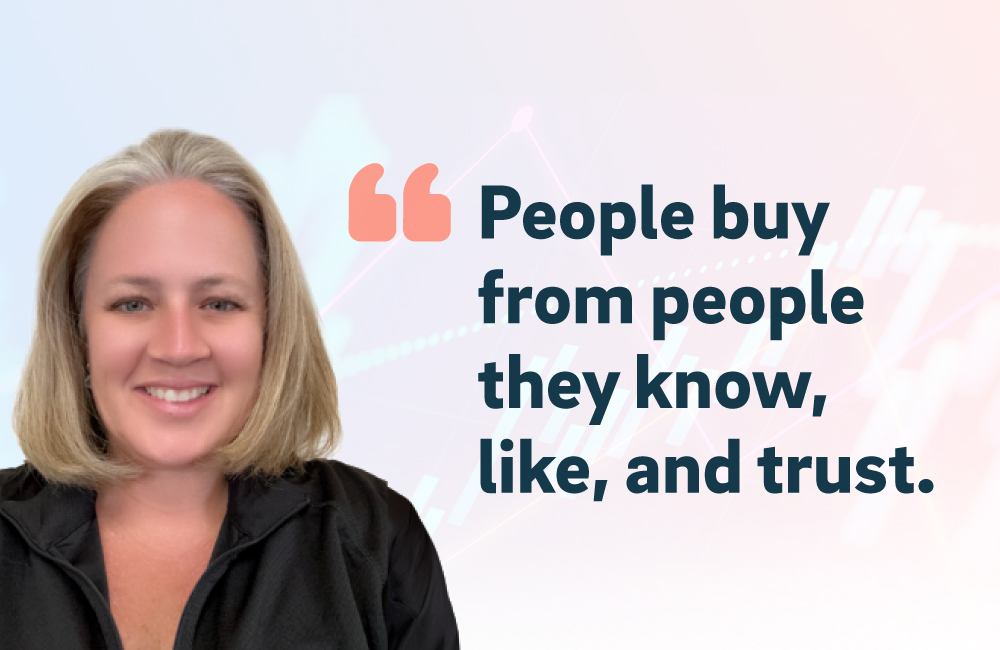
When a similar question was posed to Amanda Clay, Co-CEO of Walker Clay, she said, “People buy from people they know, like, and trust. It’s about relationships.”
She also made a very good point by saying that it’s not about winning every single client, but it’s about winning the right ones.
The distributors who continue to grow compete on value, speed, and outcomes. Those who stay stuck compete on margin alone.
Does response time make a difference for promo products distributors?
Quick Answer
Yes. Faster response times are a huge competitive advantage in the promo industry. The more efficiently teams can run, the quicker they can respond.
How quickly a promo distributor responds to a customer is one of the biggest advantages they can have, especially for distributors in the $2M – $10M range. Larger distributors tend to have slower response times due to the need for more approvals and more processes involved. A mid-size distributor who responds within an hour, versus a large distributor who responds in a day, will win more customers than they lose most of the time, even if the larger distributor has more products to offer.
The top promo distributors recognize this, and they’ve put systems in place for it. Response time isn’t simply good customer service; it’s a competitive advantage. They’ve created processes that get quotes out faster, pull sample requests quicker, and make sure customers don’t feel like their request got lost or fell through the cracks.
Swaney said his team has really learned that responsiveness isn’t just about having the answer right away. Sometimes, it’s just letting the customer know that someone is working on it.
“You assume that if a customer reaches out to you or any rep, it’s going to be a quick priority to at least pick up the ball and let them know, ‘Hey, I’ve got this. I’m working on a project right now. Give me just a little bit of time, and I’ll get right back to you.’”
Instead, Swaney found that team members would sometimes wait until they had an answer before they responded to the request.
“So often they’ll just wait until they have the answer to get back to the customer. And that is such a killer of a relationship, frankly.”
Clay takes a similar approach by acknowledging and confirming receipt of customer requests. “If a customer emails me, I respond.”
Sometimes just a quick response or acknowledgement can keep a customer from assuming their request was forgotten while the team continues working on the solution.
If your average quote turnaround takes days instead of hours, it’s a problem worth addressing. Speed is one of the few advantages that doesn’t require additional costs, just more efficient processes.
What does "acting like a partner, not a vendor" look like for a promo distributor?
Quick Answer
It means being able to anticipate a client’s needs and bring solutions to the table before they are requested. Top promo distributors bring ideas, truly understand their clients’ businesses, and proactively seek opportunities to better serve them.
Having answers for your customers before they ask the questions.
Top distributors aren’t waiting around for a detailed brief from their customers. They already understand their customers’ needs, their business, their brand, and what events they may attend. They’re communicating ideas, sending over concepts, and even pointing out potential opportunities that the customer may not have considered. They might say, “I know your annual Summit is coming up in July, here’s what several other companies in your industry did that worked really well.”
Clay takes that a step further. Instead of the client doing the research, she wants to be the resource they turn to first.
“I try to get back to them before they start doing the research. I need them to come to me and say, ‘I have an event. Here’s my budget. What do you suggest?’ And let me do that work for them.”
That means knowing which products to choose from and understanding what will actually work with the client’s timeline, budget and end goal.
“We also have enough product knowledge to tell them: you could choose that item, but it ships from this location. There’s no rush. Or it says there’s inventory, when in reality, that item is completely out of stock.”
For Clay, the goal is to provide that service to the customer. Be the partner they need.
Swaney describes the same approach like this:
“For us, proactive engagement, quick response, and then great follow-through, are probably the biggest things that are very easy to do, very controllable.”
He goes on to explain why proactive engagement can get lost in the day-to-day tasks of running a distributorship.
“So often people get caught up in the work that’s right in front of them. They forget about the relationships that drive all of that.”
So, you go from order-taker to strategist. That’s what turns a transaction into a long-term account. Not only that, but it also helps alleviate the price-matching conversation that often comes up. When you’re proving your worth and value through action, price becomes the smaller part of the conversation.
That doesn’t mean that you must be everything to every customer. It means you need to know your best customers well enough to anticipate their needs. That’s why they came to you.
Do top promo distributors run their business differently, or just sell more?
Quick Answer
They invest in their systems and processes to reduce manual work, improve visibility across the business, and they give their teams more time to focus on what really matters.
The operational difference between a distributor doing $2M and one doing $10M isn’t always the number of customers or even how great the sales team is. It’s the foundation upon which the business is built. It’s how the orders get processed. How the information gets communicated between the teams. How much time is wasted on manual tasks that a connected system could eliminate.
This is an area in particular where Swaney has taken a hands-on approach to really identify where operational problems are occurring. Over the past three years, his team has tracked errors and issues coming through their customer service team.
“I created a spreadsheet and started with five common issues. And my goal was to see if I could make a 50% improvement in errors; that would be a huge jump. And so now that list is up to 27.”
The goal wasn’t just to make a list of the errors. It was to identify patterns that could be addressed.
“What you see is that the reps will be working on it, but they’re not communicating that to the customer.”
Creating that visibility can reveal the larger issue, not just the error itself. If internal communication isn’t consistent, it raises the question of what the customer is experiencing.
“If they’re doing that with your CSR, what’s the likelihood they’re doing that with the customers?”
Top distributors invest in technology that removes those issues for their teams and for their customers. ERP systems enable them to have complete visibility into order status without making a phone call or sending an email. CRM tools that track their customers’ history, their preferences, and renewals. They even have customer-facing online stores where the customer can go and pick out products they may need to re-order.
This makes a huge difference for a couple of reasons: One, it gives your team their time back, so they aren’t buried in admin tasks. Your sales team can sell. Two, it gives you the advantage of being irreplaceable. When the customer has access to easy-to-use tools that were set up for their individual needs, going to another distributor becomes an afterthought because it would mean they would have to start over.
That’s a real advantage.
Why do top distributors focus on building strong customer relationships?
Quick Answer
They make client retention a part of the way the business operates. They proactively communicate and make reordering easier, and they take ownership when things go wrong.
Simply because they’ve made customer relationships and retention a part of their entire operation.
“The reality is that the value is in the customer and in the relationship. And for us, it really has to do with how tuned into the client relationship we are. Sometimes that means walking beside you as you identify challenges and opportunities; sometimes taking the lead as we cut a path, looking for an ideal solution; and then sometimes walking behind as we support the program and events and just kind of stay in the background and help them succeed,” said Swaney.
Having a customer who likes working with you is one thing, but having a customer who is a part of how you work is another. And that’s what the most successful promo distributors work toward. They make it easier to stay by offering company stores, branded portals, and easy re-ordering processes that make switching to a competitor feel like a downgrade.
They also make it a priority to proactively communicate with their customers when there’s a problem. They don’t wait until their customer needs them, and they don’t wait for the customer to forget about them. They update customers throughout the process. They follow up after delivery. And when a customer’s order history drops off, they find out why.
Swaney’s experience proves how communication and retention go hand in hand. Internal communication breakdowns that may create issues for a CSR or sales rep can indeed affect the customer relationship.
And most importantly, when something goes wrong, they own it. They don’t shift the blame, downplay it, or make excuses. They figure out the problem and come back with a solution. How you handle a problem is what the customers will remember most, and that can turn an unpleasant situation into one of your most loyal customers.
Losing a $200K account isn’t going to be fixed by landing a $50K one. Top distributors know this, and they treat retention as if it’s just as important as any new prospect, because it is.
Why is professional development important for promo distributors?
Quick Answer
Scaling a promo business requires a team that can operate without constant oversight. Investing in professional development helps promo distributors build that level of autonomy.
Distributors who scale their promo business to $10M and beyond have built teams that can work autonomously without constant oversight. Account managers who think strategically. Operational managers who flag issues before they become full-blown problems. Sales reps who really understand the businesses they’re selling to.
Those skillsets come from operators who invest in their teams, sharing knowledge, and creating an environment where people can grow in their roles. The PPAI 100, the industry’s most data-driven ranking of the top distributors and suppliers, ranks professional development as one of the eight metrics tied to sustained success.
A strong team means that you can take on more demand without everything falling apart. You can’t focus on growing the business and running every aspect of it. Delegation doesn’t mean giving up control – it’s how growth happens. But you can’t delegate to a team you haven’t invested in developing.
Do sustainability and eco-friendly products really matter to top promo distributors?
Quick Answer
Clients are asking more questions about sustainable products, where they’re sourced, and what materials to look for. A promo distributor that understands the details can offer real guidance instead of offering any product that claims to be “eco-friendly.”
Sustainability and eco-friendly products are becoming more of a deciding factor for clients.
Research commissioned by ASI shows that 74% of consumers prefer receiving eco-friendly products over non-eco-friendly ones. This preference is steadily gaining momentum across all industries as companies push for more sustainable operations, driving greater demand. Clients are now requesting that distributors source products with a clear intention.
The top distributors aren’t just labeling a few things as “eco-friendly” on their product lines and running with it. These distributors know the specifics, like the types of materials the products are made of, the certifications that verify these claims, and how they were sourced. They’re prepared to answer questions before they’re asked, which separates them from everyone else.
Understanding the products and the materials they’re made of is just as important as knowing which products to recommend. In a recent Growth Lab article, we take a closer look at the increasing demand for eco-friendly products and how it’s impacting promotional products distributors.
How do the best distributors market their own brand?
Quick Answer
They view their own marketing with the same importance as they would a client. Creating clear key differentiators and showcasing proof of their work makes them easier to find and makes it easier to build trust with potential clients.
Top distributors treat marketing their own brand as a priority because it truly matters.
There is a pattern that you’ll see when you look closely enough at the distributors who help their customers build powerful brand campaigns – they often don’t invest that kind of time or thought into their own, and they don’t treat it as a priority.
The promo distributors who consistently devote the same amount of thought and time to their own marketing with the same intent as they would a customer are more successful. They’re showing up constantly in the places where their best prospects spend time. They build a reputation that makes them easier to find and easier to trust.
That doesn’t mean you have to spend tremendous amounts of money on paid ads or hiring a full marketing team. It means being visible – clearly showing who you serve, what services you provide, your areas of specialization, and providing proof of the quality of your work, which speaks for itself.
Clay has taken a practical approach that’s helped her stay in front of her customer base without spamming their inbox. And better yet, doing so in a way that doesn’t take up hours each day. By creating quick script outlines, she’s been able to produce content across her social channels without spending the majority of her day doing so.
“I will write the messaging. I use a teleprompter. I film all five videos at once. It takes me 30 minutes. I save them as drafts and use captions to edit them.”
She also has a dedicated schedule with an assigned topic for each day, ensuring that messaging is always aligned with what’s going on within the industry.
That consistency is what keeps your brand and your business at the forefront of the customer’s mind when the next opportunity comes along.
You may be the best promo distributor in your market. But if the right people don’t know it, someone else will get the call.
What are top promo distributors doing differently?
Most distributors we talk to don’t have a clear picture of where their business stands. Not just on client retention, but across the operating metrics that quietly determine how much flexibility you have to deliver the kind of service that keeps clients coming back.
The Promo Growth Gap Calculator gives you that picture. Answer a few questions and get a personalized breakdown of where your business has room to improve and the metrics top distributors track most closely.